


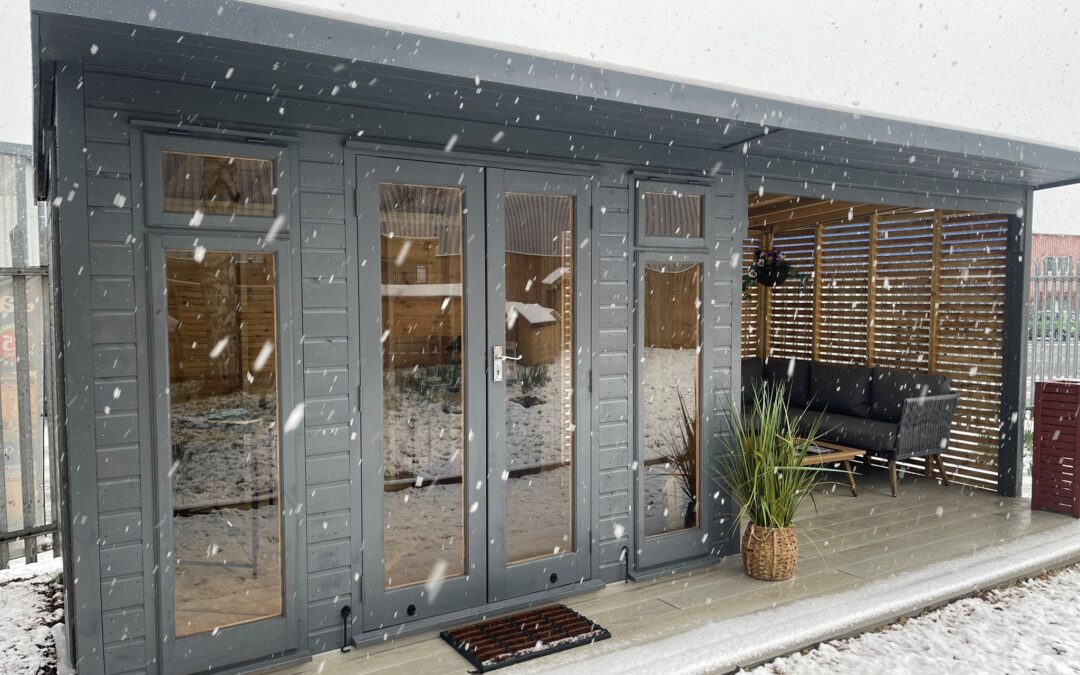
Garden sheds in winter? Well winter is an excellent time to plan and install a timber shed. The ground is visible without summer growth, delivery calendars are quieter, and you can be ready for spring storage and projects. This guide explains how to choose and prepare a base, control moisture, select the right treatment, and navigate UK planning rules. It also answers common questions about cost, longevity and siting, with practical checklists you can follow.
Do you need a base, and can you put a shed on grass?
A shed needs a solid, level, and well drained base. Putting a shed directly on grass is not recommended. Grass holds moisture, becomes uneven as it settles, and encourages rot in floor bearers. A proper base keeps your shed square, helps doors and windows operate correctly, and extends the life of the building.
If you must place a shed temporarily on grass, use pressure treated timber bearers on compacted ground with weed control fabric under a gravel layer. This is still a short term measure. For a long term installation, choose one of the base options below.
Base options explained
There are three reliable base types for a timber shed. Your choice depends on ground conditions, budget and lead time.
- Concrete slab
- Best for heavy or large sheds, workshop use, or where you need an ultra stable platform.
- Depth typically 100 mm to 150 mm of concrete on compacted Type 1 sub base; include a damp proof membrane under the slab.
- Pros, highest strength, flat finish, long service life.
- Cons, highest cost, longer curing time, more site preparation.
- Paving slabs on a sub base
- Popular for small to medium sheds where access makes concrete difficult.
- Dig to a consistent depth; lay compacted MOT Type 1; set slabs on mortar or a sharp sand and cement bed; check levels with a long spirit level.
- Pros, cost effective, quick to install, easy to lift for maintenance.
- Cons, joint settlement if sub base is not well compacted; requires accurate levelling.
- Timber frame base
- A pressure treated joist frame, levelled on ground screws, posts in concrete, or compacted pads, with decking or joists to carry the shed floor.
- Include weed membrane and free draining gravel or open ground beneath.
- Pros, fast installation, ideal on sloped or wet sites, good ventilation under the shed.
- Cons, needs careful detailing to prevent ground contact and pooling.
Winter tip, avoid laying bases on frozen ground. Work on days above freezing, protect excavations from standing water, and check levels again before the shed arrives.
Moisture control and ventilation in winter
Cold, damp air can drive condensation inside a shed. Design in airflow and keep water away from the structure.
- Elevation, sit the shed on bearers so air can pass under the floor. Do not block the perimeter with soil or gravel to the cladding.
- Drainage, design the base with a slight fall away from the shed; keep a gravel margin around the footprint to prevent splash back.
- Ventilation, fit discreet vents high and low on opposing walls to promote cross flow; do not obstruct with shelving.
- Roofing, use a quality felt or a membrane specified by the manufacturer; keep gutters clear and discharge water well away from the base.
- Interior habits, store wet tools or compost in lidded containers; allow wet items to dry before placing them inside.
Pressure treatment, finishes and ongoing care
Pressure treatment, often described as tanalised, forces preservative deep into the timber to resist rot and insect attack. Worcester Timber Products manufactures sheds from pressure treated timber from FSC approved sawmills, which gives you a strong starting point for long term performance.
A factory pressure treatment is not a decorative finish. For best results, apply a breathable, microporous oil or stain once the timber has dried after installation.
- Initial finishing, choose high quality exterior oils that repel water and protect against UV. As an official stockist, we recommend osmo oils for a durable, low maintenance finish.
- Application, clean and dry the surface, apply thin coats with a good brush, and allow the correct drying time between coats. Pay extra attention to end grains and cut edges.
- Fixings, use galvanised or stainless steel hardware to reduce staining and corrosion.
- Annual check, inspect for movement, leaf build up and scuffs. Top up finishes on weather facing elevations as required.
Planning permission for a timber shed
Most domestic sheds fall under Permitted Development in England (see the Planning Portal outbuildings guidance) and you often do not need planning permission if you follow typical limits. Always check your local authority guidance and any covenants on your property. Key rules to consider under Permitted Development in England (use the Government’s Permitted Development technical guidance if you’re unsure):
- The shed is not in front of the principal elevation of the house.
- It is single storey with a maximum eaves height of 2.5 m.
- Maximum overall height, 4 m for a dual pitched roof, or 3 m for any other roof.
- If within 2 m of a boundary, the total height must not exceed 2.5 m.
- Outbuildings, including sheds, should not cover more than 50 percent of the land around the original house.
- In conservation areas, Areas of Outstanding Natural Beauty, National Parks or for listed buildings, extra controls apply. Seek advice before ordering.
What size shed can you build without planning permission? Many popular sizes, such as 6 x 4, 8 x 6, 10 x 6 and even larger, can comply if heights and placement meet the limits above. Measure carefully and confirm heights when comparing models.
How long do wooden garden sheds last?
With a quality pressure treated structure, a suitable base, and regular maintenance, a wooden garden shed can last 15 to 25 years or more. Longevity depends on:
- Elevation and drainage at the base.
- Quality of cladding and framing.
- Roof covering and guttering maintenance.
- Timely re treatment of exposed faces and cut ends.
- Local exposure to wind and driving rain.
Worcester Timber Products manufactures heavy duty sheds with robust frameworks and professional installation options, which supports long service life.
Is it cheaper to make a shed or buy one?
If you own tools, have carpentry skills, and value your time at zero, building from scratch can appear cheaper on paper. In practice, buying a professionally manufactured shed is often more cost effective. Consider:
- Material purchasing at trade rates versus retail pricing.
- Wastage and mistakes on first builds.
- Design details such as bracing, weatherproofing, and joinery that affect longevity.
- Delivery, access, and installation time, especially in winter conditions.
A manufactured shed arrives with proven design, pressure treated timber, and a faster installation schedule. Worcester Timber Products also offers a delivery and installation service, which means you get a finished building quickly and correctly aligned.
Quick winter installation checklist
- Confirm planning status and any covenants.
- Choose a base type suited to ground conditions.
- Mark out the footprint, allow space for roof overhangs and guttering.
- Provide a gravel margin around the shed for splash reduction.
- Ensure ventilation paths underfloor and through wall vents.
- Treat cut ends and apply finishing coats once dry.
- Fit gutters and direct water away from the base.
- Book professional installation if access is tight or the shed is large.
See sheds in person and discuss bespoke sizing
Visit our Hartlebury Show Garden at Unit 6, Beech Drive, Hartlebury Trading Estate, DY10 4JB to compare cladding profiles, door options and layouts. You can step inside display buildings, review finishes, and talk about bespoke sizing or access constraints. Our team will help you plan the right base, organise delivery, and schedule installation around winter weather.
If you are comparing models or looking beyond a standard wooden garden shed, our display also showcases decking and garden structures so you can plan the whole project in one visit.
Summary
A successful winter shed project starts with the right base, good ventilation, and a clear plan for finishing and maintenance. Do not place a shed on grass. Choose a concrete slab, paving, or a timber frame base that drains and stays level. Use pressure treated timber, apply a breathable finish, and check UK Permitted Development limits to site your shed with confidence. Worcester Timber Products sources timber from FSC approved sawmills and offers professional manufacture, delivery and installation, so you can secure a long lasting, well built shed that is ready for spring.
Internal links you may find useful: